
THE TANK NOTES
Nutrient-solution notes
What published sources say pH and EC can show in a hydroponic reservoir, and what they still are not.
What do pH and EC tell you in a nutrient solution, and what do they not?
In a hydroponic reservoir, pH describes acid–base state and EC describes conductivity. Science in Hydroponics reported 50 nutrient-salt combinations and also compared solutions near the same EC that still differed in ion identity. A displayed ppm is not the mass of a target nutrient. These pages attribute those experiments to their author. WaterMeasure has not published an original series.
| Note | Comparison it keeps |
|---|---|
| pH and EC | Acid–base state versus conductivity |
| TDS is a factor | 500, 600 and 700 scales versus raw EC |
| What ATC corrects | Electrode compensation versus the sample’s own chemistry |
| Probe immersion | A handheld dip versus continuous immersion |
- Science in Hydroponics, 50 nutrient-salt combinations ↗
- Science in Hydroponics, same EC, different ions ↗
- Thermo Fisher, pH Measurement Handbook ↗
Which notes are in this edition, and whose measurements are they?
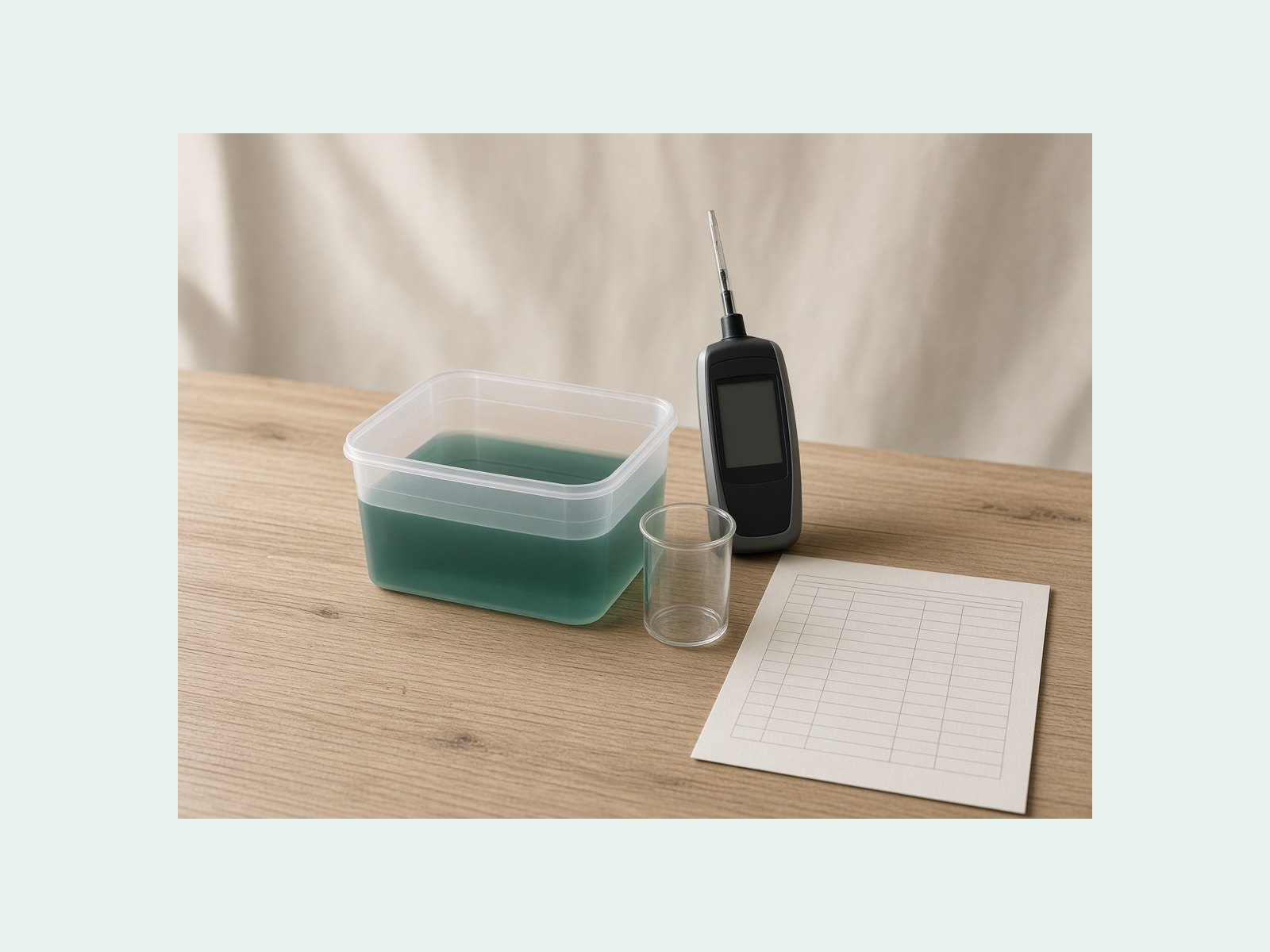
This edition has four source notes: pH and EC, the TDS factor, what ATC corrects, and handheld dips versus continuous immersion. Each one names the publication it cites and states the limit of that citation. The cards below are those notes. They are not results tables, and the blank records do not contain readings.
 Source-based note
What pH and EC tell you in a nutrient solution
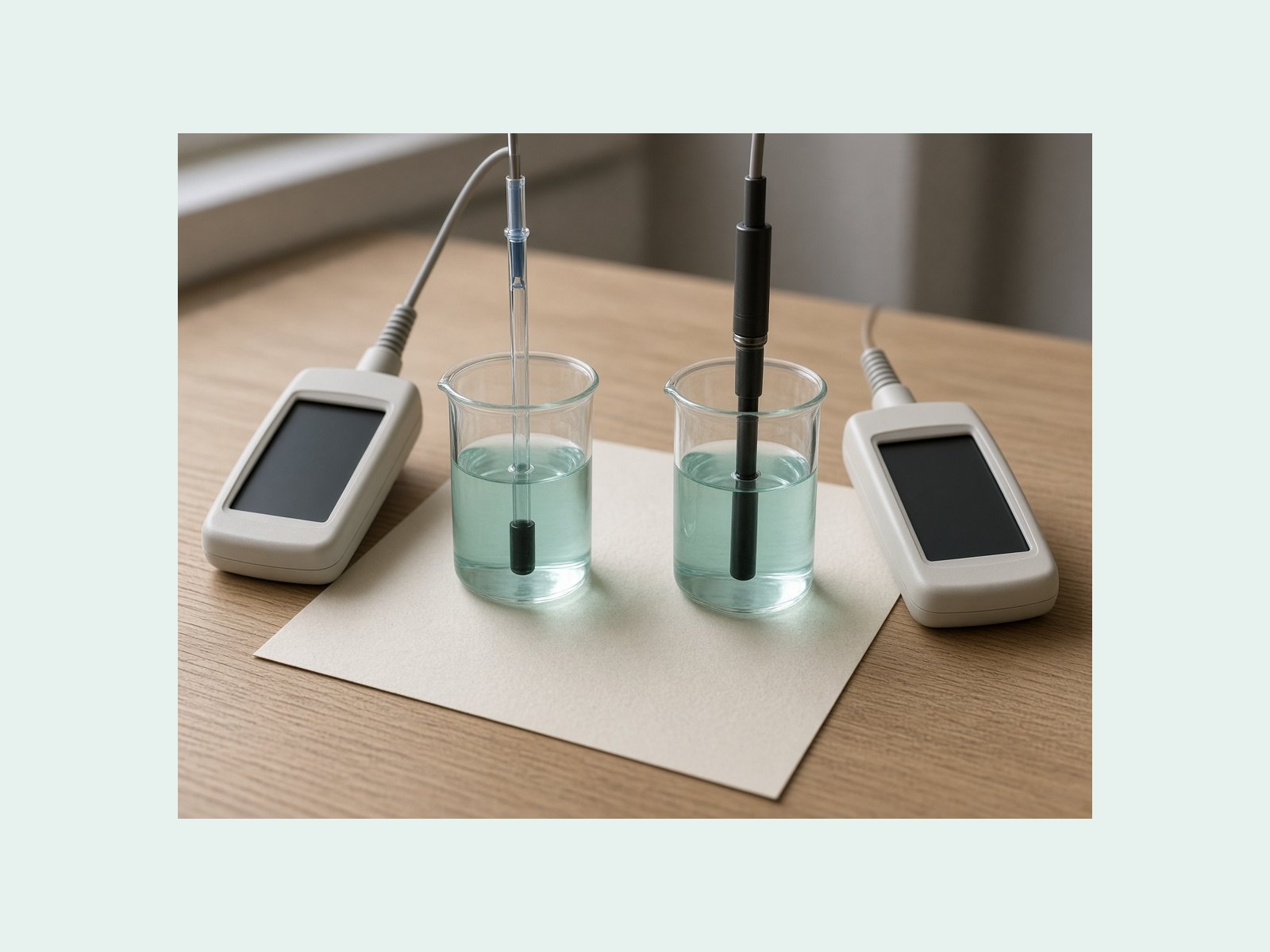
pH is an acid–base state. EC is a conductivity. Published hydroponic experiments keep those two readings apart, and they do not name individual nutrients.
8 MIN READ ↗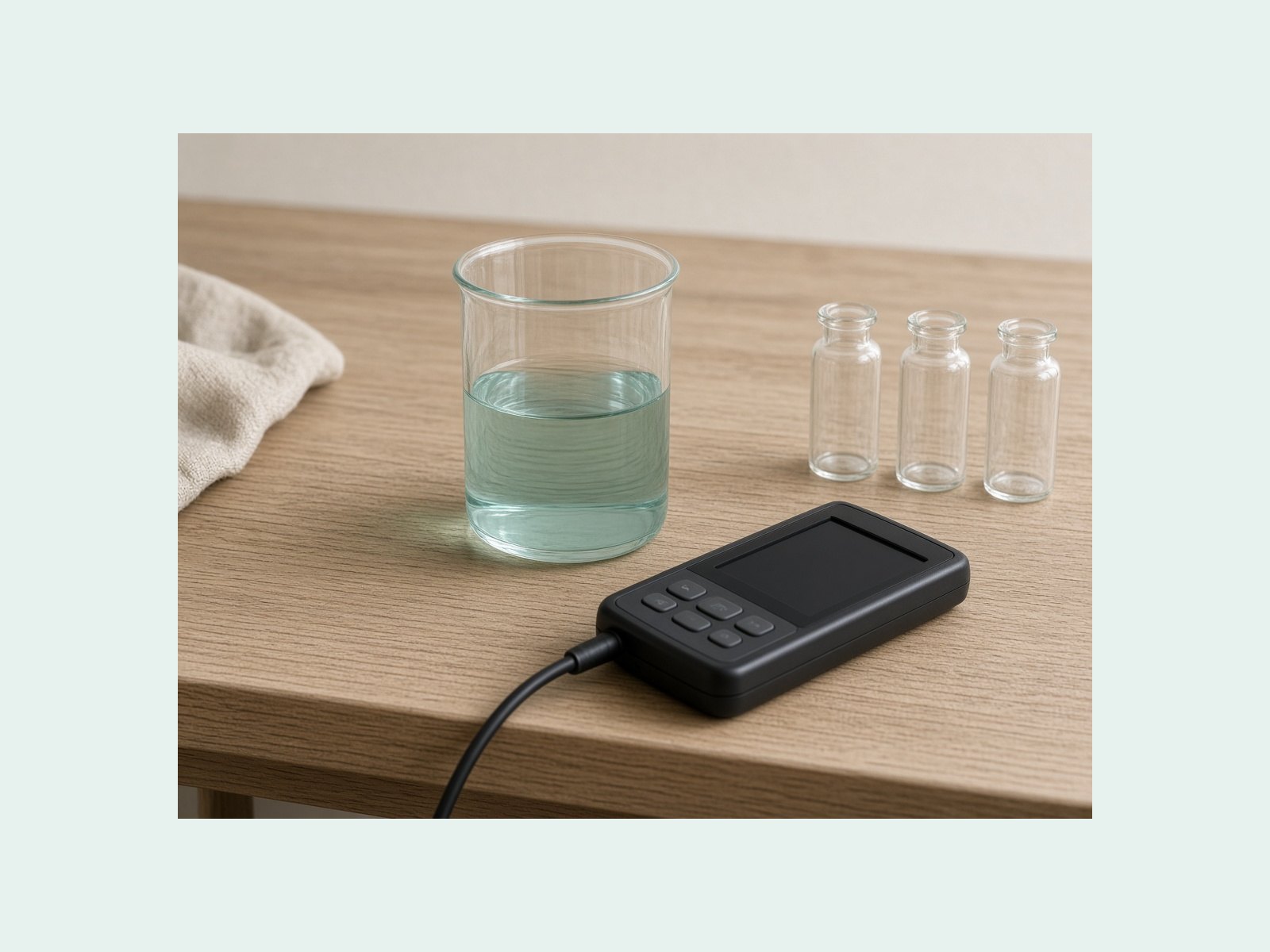 Source-based note
TDS on a meter is EC times a factor
Portable meters usually display ppm as conductivity multiplied by 500, 600 or 700. That number is not a drinking-water safety decision.
7 MIN READ ↗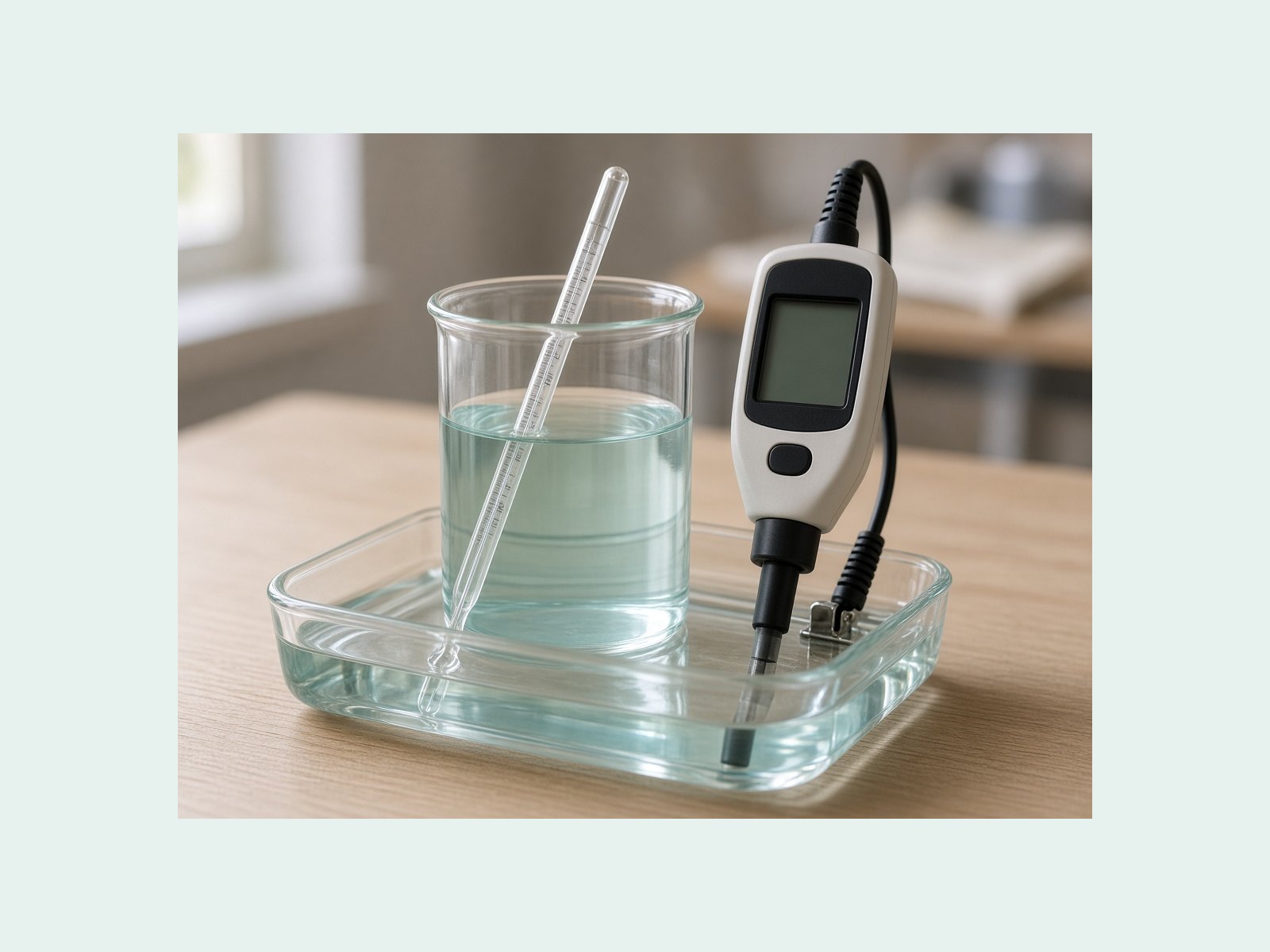 Source-based note
What ATC corrects — and what temperature still changes
Automatic temperature compensation adjusts an electrode slope or a conductivity coefficient. It does not turn the sample into its chemistry at 25 °C.
7 MIN READ ↗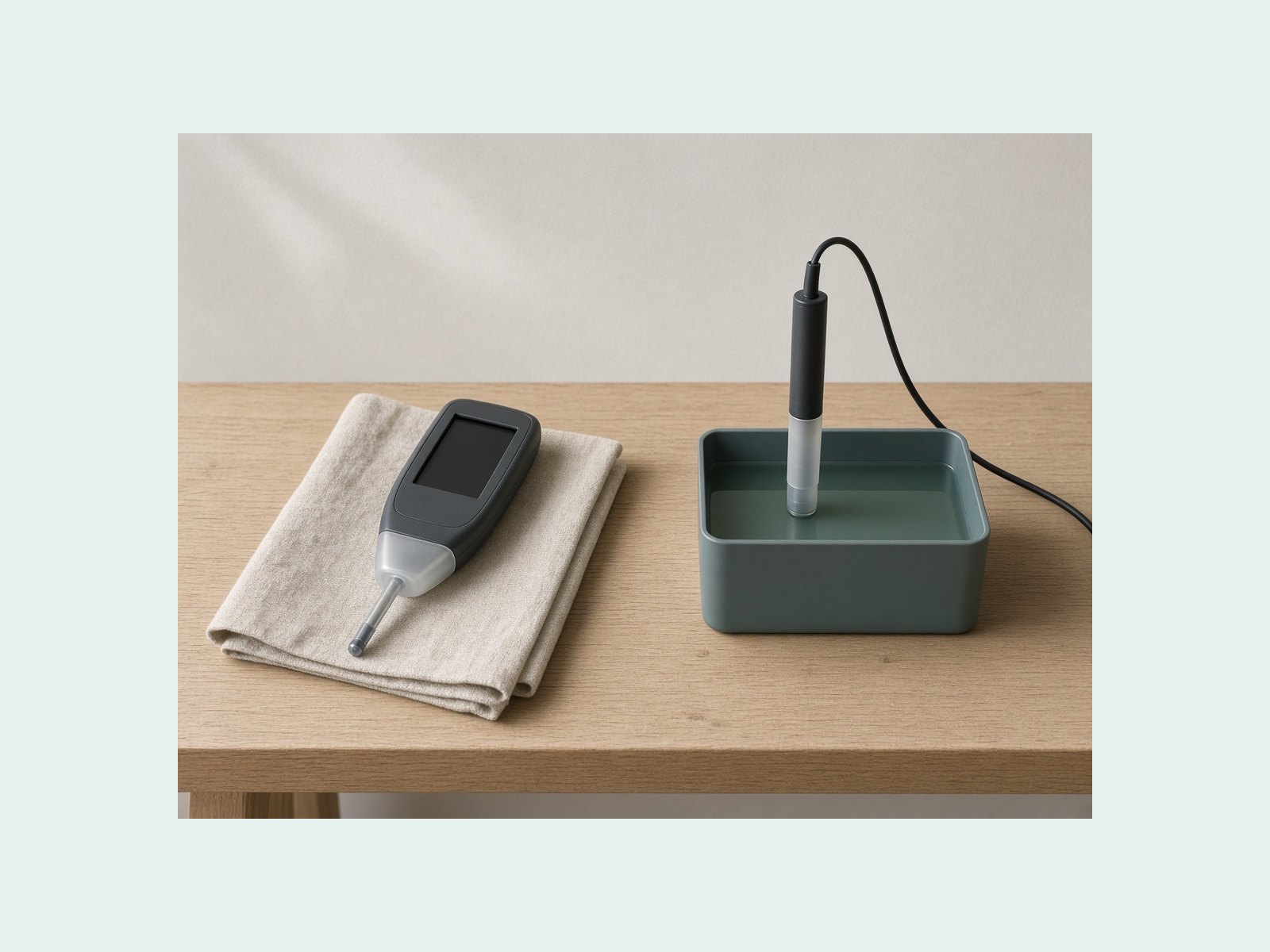 Source-based note
Handheld dips and continuous immersion are different jobs
A waterproof handheld probe is not automatically a probe that the maker allows to stay in the tank. Handbooks for the related retail models have not been checked.
7 MIN READ ↗