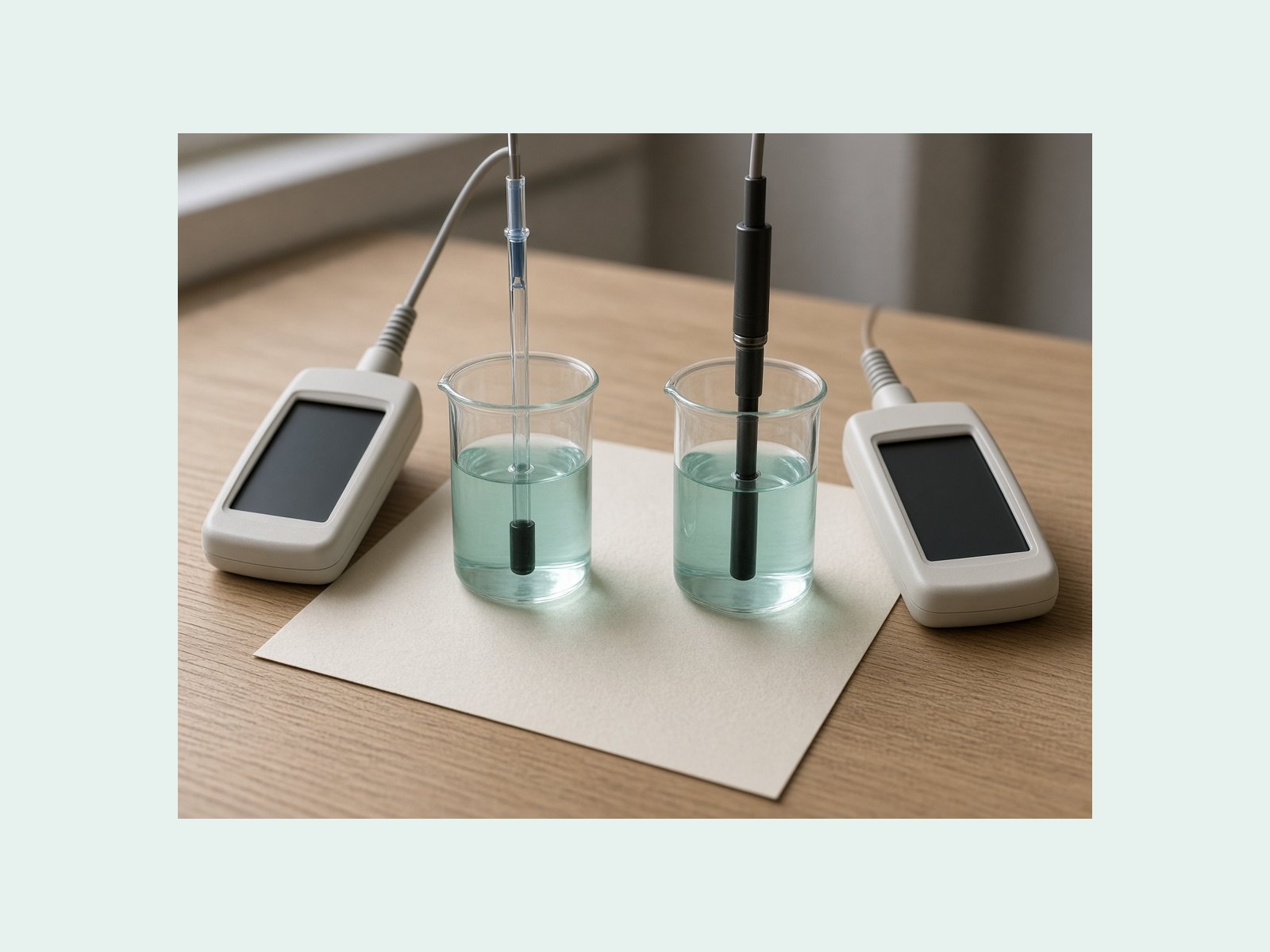
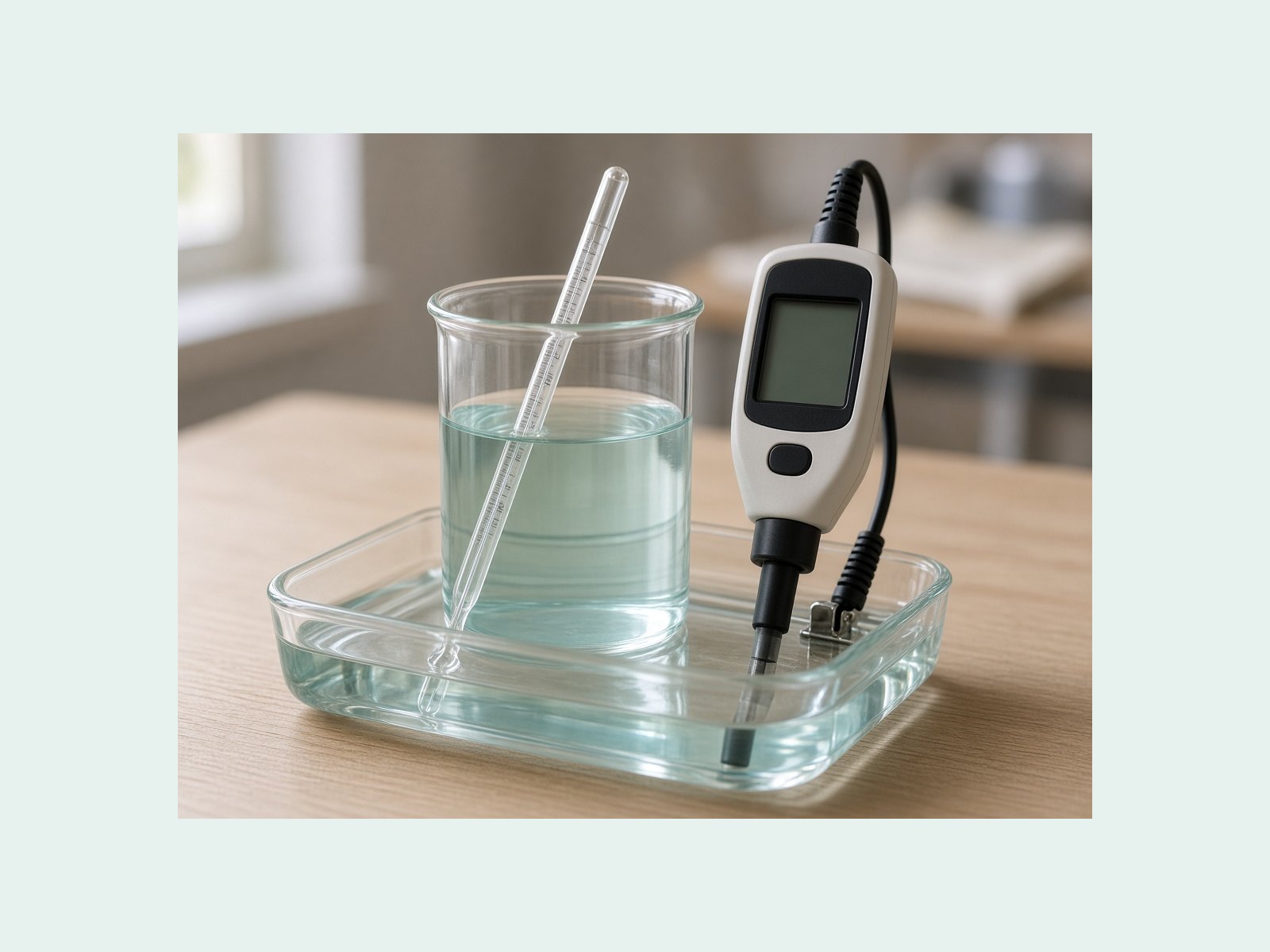
A handheld “TDS ppm” is usually conductivity multiplied by a scale factor. Science in Hydroponics separates the 500, 600 and 700 scales and asks readers to compare raw EC when the factor is unknown. WHO states that TDS has no health-based guideline value. DWI drinking-water safety is a different assessment. This page does not convert a nutrient-tank ppm into a drinking-water result.
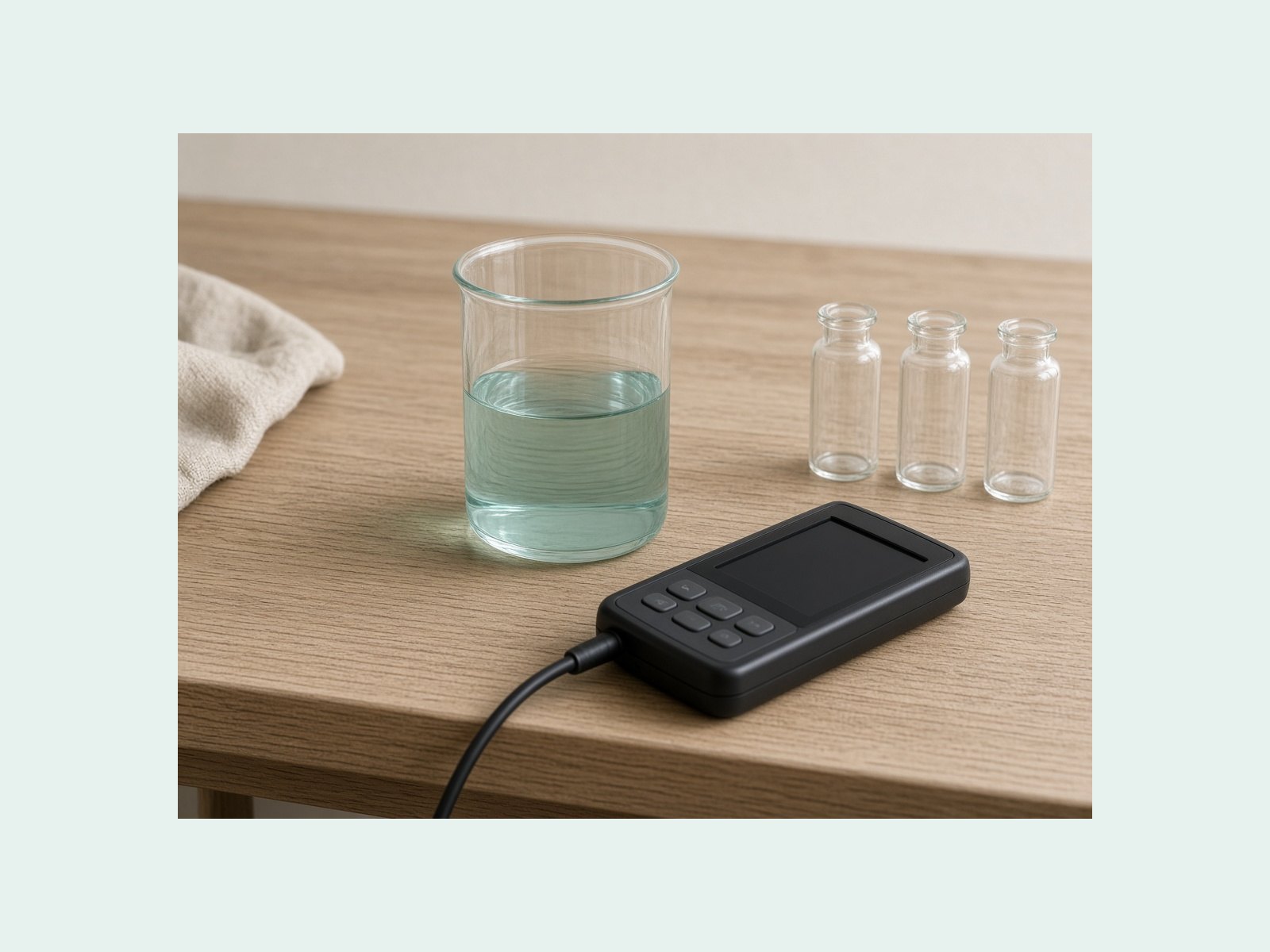
Why can the same solution show three different ppm values?
Many portable meters show a TDS figure in ppm. That figure is commonly EC × factor, where the factor is a scale chosen in the instrument — often 500, 600 or 700. The same solution can therefore print three different ppm values on three instruments.
Science in Hydroponics publishes an EC-to-ppm chart that keeps those three scales apart. The teaching point is that instruments should be compared on the original conductivity when the factor is unknown or differs. The chart is that author’s tool. It is not a WaterMeasure calculator and it is not a table of WaterMeasure readings.
The same author shows that equal masses of different salts do not share one conductivity. A displayed ppm is therefore not “1,000 ppm of the nutrient you intended to add”.
Why is a nutrient-tank ppm not a drinking-water result?
WHO’s background document on total dissolved solids in drinking-water states that TDS has no health-based guideline value. The document treats TDS as an acceptability and aesthetic topic for drinking-water, not as a stand-alone health limit. The UK Drinking Water Inspectorate describes drinking-water standards as a combination of microbiological, chemical, metal and risk-assessment requirements. A nutrient-tank meter that prints a ppm from conductivity does not perform that assessment.
This page therefore does not convert a nutrient-tank ppm into a drinking-water result. Those would be drinking-water safety conclusions. They are outside the scope of a nutrient-solution note.
What would a later TDS record have to show?
If this publication later reports original TDS displays, the record will keep raw EC, the instrument’s stated or inferred factor, and the displayed ppm in separate columns. Until that record exists, use the blank records. This page does not fill those columns, and it does not treat a shop’s printed TDS range as a checked handbook.
The operator also owns hmdigitalp.co.uk — a commercially related retail site — and smartquali.co.uk — a commercially related retail site. A shop listing that prints a TDS range is not a checked handbook and is not a WaterMeasure measurement.
Which sources are cited, and what do they not prove?
Sources checked on 23 September 2026. Numbered references point to the original publishers. Their sample measurements are not WaterMeasure measurements. Manufacturer documentation and retail listings are identified separately, and a shop catalogue is not a checked handbook. No instrument in this note has been tested by this publication.
- Science in Hydroponics, The ultimate EC to ppm chart and calculator ↗Fernandez, April 2021. Separates the 500, 600 and 700 display scales and argues that instruments should be compared on raw EC when the factor is unknown.
- Science in Hydroponics, Why TDS is not equal to total dissolved solids in hydroponics ↗Daniel Fernandez, May 2020. Shows that the same mass of different salts does not produce the same EC, so a displayed ppm is not the mass of a target nutrient. Those solutions are the author’s, not WaterMeasure measurements.
- WHO, Total dissolved solids in drinking-water: background document ↗World Health Organization background document for the Guidelines for drinking-water quality. States that TDS has no health-based guideline value. That is an official drinking-water document, not a hydroponic test.
- Drinking Water Inspectorate, Drinking water standards and regulations ↗UK Drinking Water Inspectorate overview of standards and regulations. Drinking-water safety is a combination of microbiological, chemical, metal and risk-assessment requirements. A handheld TDS ppm is not that assessment.
Keep the conditions with the reading.
The CSVs have column headings and one empty row. They contain no fabricated sample readings.
Download the repeatability record ↓